Fact-checking matters even when we feel certain. J.A. Adande’s story about getting a name wrong raises two questions for me: how do we make verification part of the work, and does fear of punishment help people do it better?
A confident writer can still get a name wrong
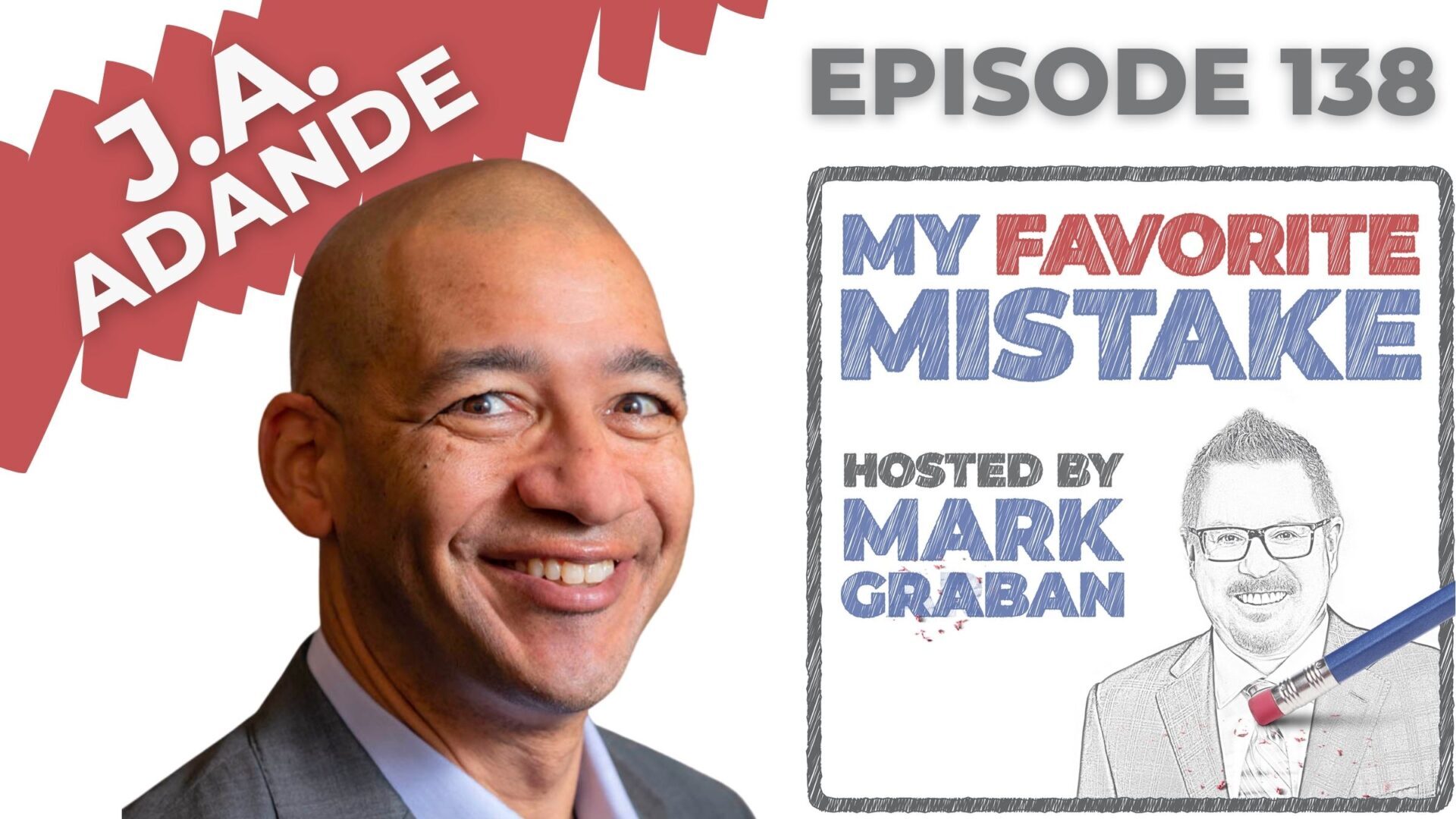
J.A. Adande, a long-time sports columnist and ESPN commentator, discussed his teaching at Northwestern University’s Medill School of Journalism, Media, Integrated Marketing Communications. In our conversation, he described a mistake while writing a human interest story about a California soccer coach whose father had died. During the coach’s grief, his players urged him to keep coaching as a tribute to his dad.
After it went to print, the coach told J.A. that he liked the story, but “his name was Steve, and you called him Dave.”
J.A. was mortified, but as he recalls the mistake, “I was just so convinced, as I was writing it, that his name was Dave that I didn’t double check it. I thought I was right. That wasn’t good enough. My mistake was that I trusted myself. You should never trust yourself.”
Maybe that’s true when some sort of fact is easily verifiable — double-check if in doubt and do so even if you’re confident. Thinking back to a story from Chapter 2, if Greg Cote couldn’t confirm the soccer player’s story through another source, he could have simply not written the story. Time spent double-checking to prevent errors would have been worth the reduced risk of embarrassment in these cases.
What is the Medill F?
In his episode, J.A. and I discussed the “Medill F,” a famous grade in journalism. It’s given to students who have written an excellent article but have been wrong about some verifiable fact, like a name or the spelling of a place.
“It’s not an expectation that everybody’s going to be perfect. You don’t get an F for a typo, but you get an F if you misspell somebody’s name. It speaks to the standards that Medill has held traditionally. The goal is to instill that dread, that fear, that sick pit in your stomach from making a mistake and having it get to print.”
Does fear improve accuracy?
Does the practice of the “Medill F” make the professors feel like they are helping? I’ve been in enough fear- and punishment-based workplaces, including factories and hospitals, to be convinced that fear is ineffective and counterproductive. Teaching and reinforcing the journalistic best practices of having a second source and checking names might be more effective as procedural mistake-proofing, even if it’s not perfect. I wouldn’t expect the fear factor to help.
I could be wrong. I’d love to see data about the impact of the Medill F. Do students who receive that threat or that grade make fewer mistakes than students who don’t? If so, does the effect wear off over time as our confidence builds from not making mistakes (or not having them discovered)?
When J.A. was teaching journalism at the University of Southern California, he unilaterally adopted this policy, remembering his days as a Northwestern student. J.A. said the best reward was a student thanking him for instilling the importance of double-checking every detail.
J.A. says,
“We’re all going to make mistakes, but you want to minimize it.”
There we have it — minimizing is not the same as eliminating. That’s why writers have editors and proofreaders to guard against factual errors and typos.
The “Medill F” might be a cute story, but it doesn’t seem to be grounded in any science — it‘s likely a mistake to adopt that fear-based approach in other workplaces. I’m not blaming J.A. for that. The policy might be a mistake at Medill—how would they evaluate its effectiveness? How do the actual outcomes compare to their expected outcomes?
Would they fear it’s a mistake to change that policy? How would they evaluate that decision?
Build fact-checking into the process
For a document your team publishes regularly, identify the facts most likely to cause trouble: names, dates, figures, quotations, and links. Check them against the original source rather than relying on memory or another summary. Make the source easy for the next reviewer to find.
If an error gets through, correct it and ask where the check failed. Was the source missing? Was responsibility unclear? Did the reviewer lack time? Those questions lead to changes you can test. They also connect with mistake-proofing and responding without blame or shame.
Accuracy remains the goal. A useful review process helps people meet that standard and makes it easier to flag uncertainty before publication. For more ways to discuss stories like J.A.’s, see my guide to using podcast episodes with your team.
Bring a useful conversation to your team
Start with a free preview of The Mistakes That Make Us. See how the book approaches learning, accountability, and improvement before deciding whether it is right for you.
Email registration required to receive the preview.
Prefer to listen? Choose a My Favorite Mistake episode to discuss with your team. To explore these ideas together, bring Mark to your organization or event.