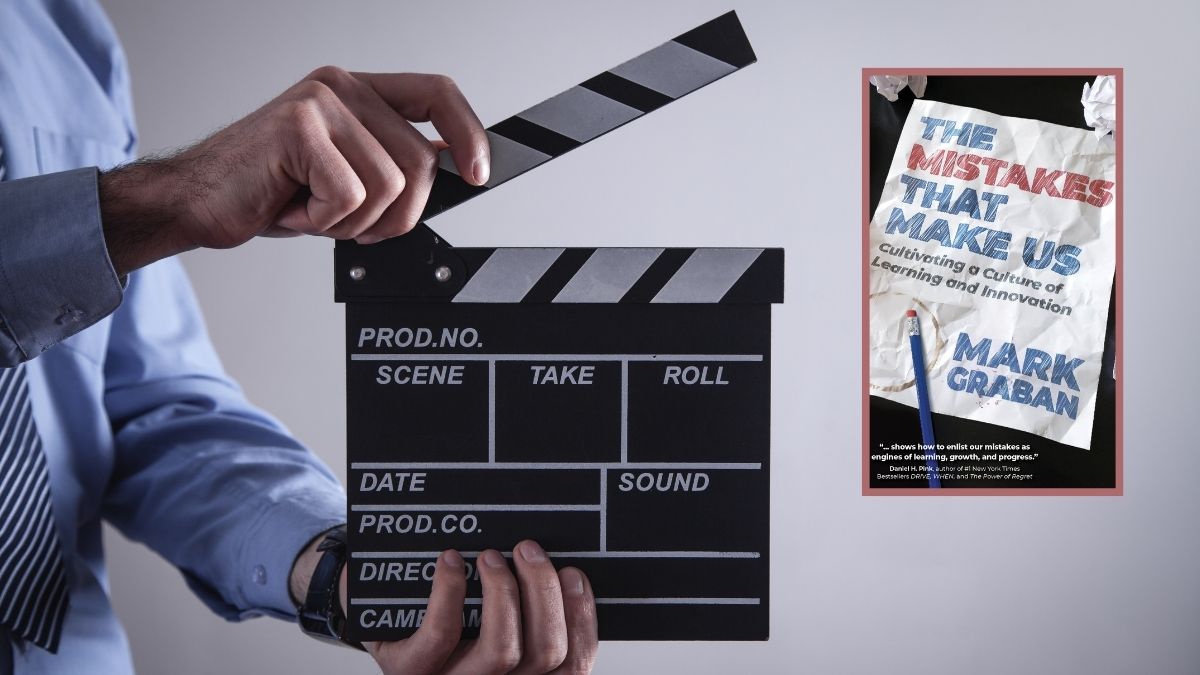
Some movie mistakes make us laugh. Others prompt a useful question about our own work: how did something so obvious in hindsight get missed at the time? I find that question more interesting than simply spotting who got it wrong.
Spinal Tap’s Stonehenge: a small symbol, a big misunderstanding
In my favorite film, This Is Spinal Tap, the band wants an 18-foot Stonehenge stage prop. The sketch specifies 18 inches. The result is funny on screen, but the communication problem is familiar: the person making the request and the person doing the work do not share the same picture of the result.
A check of the intended size before building could have exposed the mismatch. At work, an example, a sketch with clear units, or a short conversation can help reveal assumptions before they become expensive. I collected more scenes on my Spinal Tap mistakes page.
Distinguish a character’s mistake from a production error
The Stonehenge mix-up is part of the story. A continuity error is something the filmmakers did not intend viewers to notice. Both can get us thinking about errors, but they are different kinds of examples.
A fictional scene can suggest a question to ask about work. It does not prove that a particular management practice works. I want to use the story as a starting point for investigation, not as a substitute for evidence.
Match the response to the consequences
One question I ask myself is: “What’s the worst that could happen?” If the likely downside is small and reversible, a small test may teach us more than a long debate. If a mistake could cause serious harm, we need stronger safeguards before acting.
A rehearsal, simulation, or prototype can let us learn without exposing people to the full consequences of a failed attempt. The Groundlings story offers a useful discussion of learning from an unsuccessful performance. The limits of that analogy matter as much as the lesson.
Make the next mistake easier to catch
After a misunderstanding, ask where it could have been detected earlier. Could a unit of measure be written out? Could the recipient explain the request back in their own words? Could the process flag an unlikely value before the work proceeds?
Those questions connect with mistake-proofing. The aim is to reduce reliance on remembering to be careful, while making it easier to raise a concern when something looks wrong.
For your next team conversation, choose one recent mix-up. Compare what each person expected with what happened. Then agree on one change to test. There is more to learn from that discussion than from deciding who should have read the napkin more carefully.
Bring a useful conversation to your team
Start with a free preview of The Mistakes That Make Us. See how the book approaches learning, accountability, and improvement before deciding whether it is right for you.
Email registration required to receive the preview.
Prefer to listen? Choose a My Favorite Mistake episode to discuss with your team. To explore these ideas together, bring Mark to your organization or event.