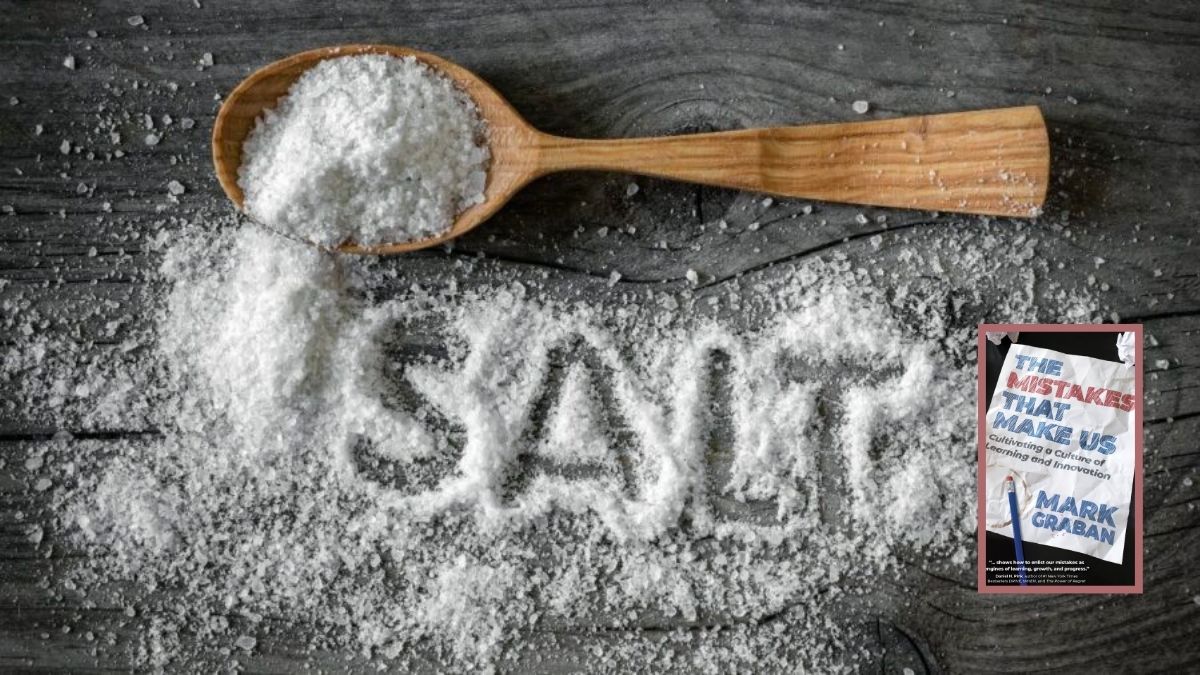
When I’ve taken cooking classes, I was taught to taste as I go. With seasoning, add some salt, taste, and decide whether more is needed. Adding more is easier than taking it back out.
A Yahoo Lifestyle article about following recipes prompted the original version of this post. The lesson I want to explore here is about feedback: when do we discover that a choice did not produce the result we expected?
Too much salt: learn while you can still adjust
If a dish is already too salty, the opportunity for a small adjustment has passed. Tasting during preparation gives us information earlier, when there may still be a simple next step.
There is a useful parallel at work. We can review a small part of a project before committing to the whole approach. We can ask the person receiving a handoff whether the information is useful before rolling out the same format everywhere. Those checks do not guarantee success. They give us a chance to notice a problem before it becomes larger.
A book example: John Grout and the warning we click past
In The Mistakes That Make Us, mistake-proofing expert John Grout discusses a familiar slip: closing a document without saving it. A warning asks whether we are sure, but we can click through that warning out of habit. One slip can follow another.
Software that saves work automatically changes the task. It reduces dependence on remembering to save or carefully reading a final warning. As I noted in the book, writing in Google Docs gave me the benefit of that approach.
That example helps separate two useful responses. A check can help us discover a problem, much as tasting does. A change in the process can reduce the chance of the problem occurring in the first place. Read the book excerpt on mistake-proofing for more of Grout’s example.
Clear instructions matter too
Before deciding someone failed to follow directions, examine the directions. Were the units clear? Was an important condition left unstated? Did the person have the tools or information needed to do the task as intended?
In a recipe, an ambiguous instruction can leave the cook guessing. At work, we can create the same problem with a form, an email, or a procedure. Asking people to be careful does not resolve the ambiguity.
For a related discussion, see checking assumptions before they become mistakes. The useful question is what each person understood at the time, not what seems obvious after we know the outcome.
Find an earlier, useful check
Choose a task where your team often discovers a problem late. Where could you check a small part of the work sooner? Who can tell you whether it meets the need? What could still be changed at that point?
Then ask Grout’s question in another form: are we adding a warning that people might miss, or can we change the work so it relies less on memory? A clearer input, an automatic save, or a design that makes the wrong choice harder may help more than another reminder.
Use the lesson without stretching the analogy
A cooking example is a useful way to talk about feedback. It does not mean every workplace decision should be handled like seasoning dinner. The consequences of a mistake determine what checks and safeguards are appropriate.
The broader habit is to learn while a change is still manageable. For another example of making a test explicit, read about an experimentalist mindset. What is the equivalent of tasting earlier in the work your team does?
Bring a useful conversation to your team
Start with a free preview of The Mistakes That Make Us. See how the book approaches learning, accountability, and improvement before deciding whether it is right for you.
Prefer to listen? Choose a My Favorite Mistake episode to discuss with your team. To explore these ideas together, bring Mark to your organization or event.