
A missed field goal is visible. Thousands of people see it happen, and plenty have opinions about what the kicker should have done.
Mistakes at work can be less visible. A questionable assumption goes unchallenged. A struggling manager keeps quiet. A team repeats a process that isn’t producing the results it needs.
In conversations with former athletes on My Favorite Mistake, I’ve heard lessons that apply to both situations. They go beyond being resilient or trying harder. They involve how we practice, when we ask for help, and what we do after something goes wrong.
Brion Hurley: More practice can reinforce the wrong approach
When former Iowa kicker Brion Hurley joined me, his favorite mistake concerned his practice routine.
He spent much of his time attempting long field goals, assuming that getting better at those would make shorter kicks easy. Looking back, he questioned that assumption. He wanted greater consistency on makeable kicks, but his practice emphasized distance. He also described the value of attempting fewer kicks and stopping to evaluate each one. Listen to Brion’s episode.

That raises a useful question for any workplace: Are we practicing what we actually need to improve?
Repeating a presentation ten times might help us deliver it more smoothly. But if the audience cannot understand the main point, repetition alone won’t solve that problem. We need feedback about the message.
The same applies to a recurring task. Before telling somebody to work harder or get more experience, look at the method they are repeating. What feedback do they receive? What can they change between attempts?
Experience gives us opportunities to learn. We still have to use them.
Anthony Trucks: Success in one field doesn’t remove the need for coaching
After his NFL career, Anthony Trucks opened a training business. He committed to a large space without the clients or business systems needed to support it.
When the business struggled, he sought help. A coach pushed him to examine basic questions about attracting clients, explaining his services, and operating the business. Anthony had been coached throughout his football career. In business, he had initially tried to figure things out without that support. Listen to Anthony’s episode.
I see a connection to people moving into leadership roles. Being an excellent engineer, nurse, or salesperson doesn’t mean we already know how to lead a team.
We should expect learning to be part of that transition. Yet a promotion can make admitting uncertainty feel more difficult: They chose me. Shouldn’t I already know how to do this?
Leaders can help by making support specific. Who can the new manager consult? When will they review a difficult situation together? What can they practice before facing it alone?
Asking for help is easier when help is available—and when using it is treated as part of doing the job well.
Jen Welter: Appearing perfect can make help harder to reach
Dr. Jen Welter played professional and semi-professional football before becoming the first woman to coach in the NFL.
In our conversation, she described the mistake of trying to maintain an appearance of perfection. During the intense attention surrounding her work with the Arizona Cardinals, she lacked support for some of the opportunities and demands coming her way. She spoke candidly about not being open enough to help and being taken advantage of. Listen to Jen’s episode.
Her experience connects with Anthony’s, although their circumstances were different. Both described limits to handling everything themselves.
For leaders, there’s also a question about the example we set. If I always present myself as certain, prepared, and in control, what am I teaching others about admitting a mistake?
Saying “I missed that” or “I need another perspective” can make a conversation more honest. But the response matters, too. If someone asks for help and receives ridicule or irritation, they have learned something about whether to ask again.
That’s where psychological safety becomes practical. People need evidence that they can acknowledge a limitation without being treated as incapable.
The kickers: Return to the process, then learn from the result
In a special episode featuring former kickers, Jay Feely recalled missing three potential game-winning kicks in one game. He described how fear of another miss affected him—and how returning his attention to his kicking fundamentals helped him handle later pressure.
David Akers emphasized steady improvement while accepting that perfect performance would remain out of reach. Listen to the kickers’ episode.
My takeaway is that we need both preparation for the next attempt and time to understand the previous one.
A person handling the next customer, patient, or production task may need to regain focus immediately. Later, the team needs an opportunity to examine what happened. Moving on becomes a problem when it means never reviewing the mistake.
And I would be careful about turning athletes’ stories of overcoming criticism into a management technique. Someone learning despite humiliation doesn’t establish that humiliation helped.
A leader can maintain high expectations while asking useful questions:
- What were you trying to accomplish?
- What made the task difficult?
- What did we learn that we didn’t know before?
- What will we change, and when will we check whether it helped?
Give people something more useful than “be tougher”
These episodes leave me thinking about the conditions we create around performance.
Brion’s story prompts us to examine practice. Anthony’s points toward coaching. Jen’s invites us to question the pressure to appear perfect. The kickers remind us to focus on actions we can take while continuing to learn from results.
For your next team discussion, choose one recent mistake that people can discuss respectfully. Look beyond who made it. Examine the preparation, information, support, and feedback available at the time.
Then choose one improvement to test.
What would make the next attempt more likely to succeed?
Bring a useful conversation to your team
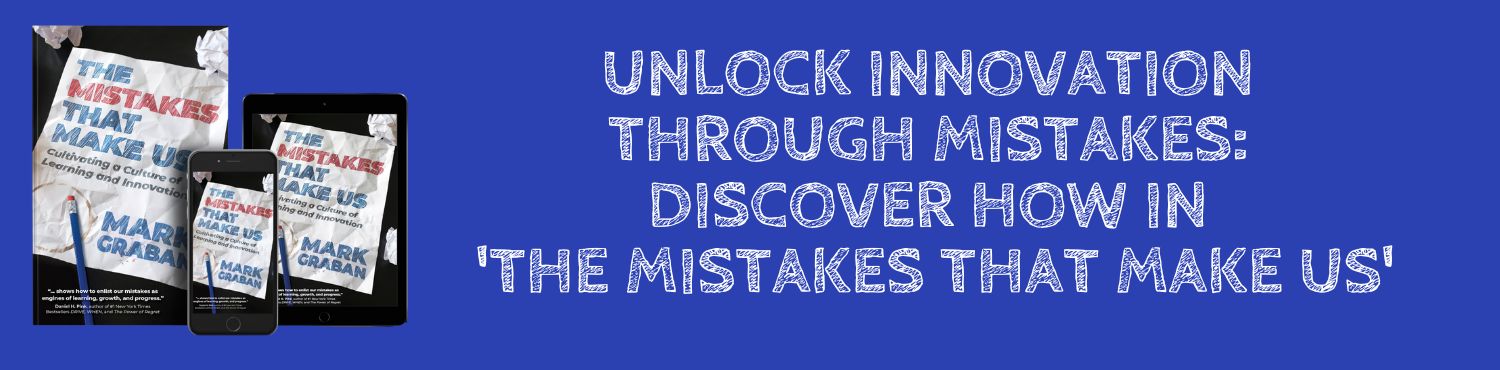
Start with a free preview of The Mistakes That Make Us. See how the book approaches learning, accountability, and improvement before deciding whether it is right for you.
Prefer to listen? Choose one of the episodes above to discuss with your team. To explore these ideas together, bring Mark to your organization or event.